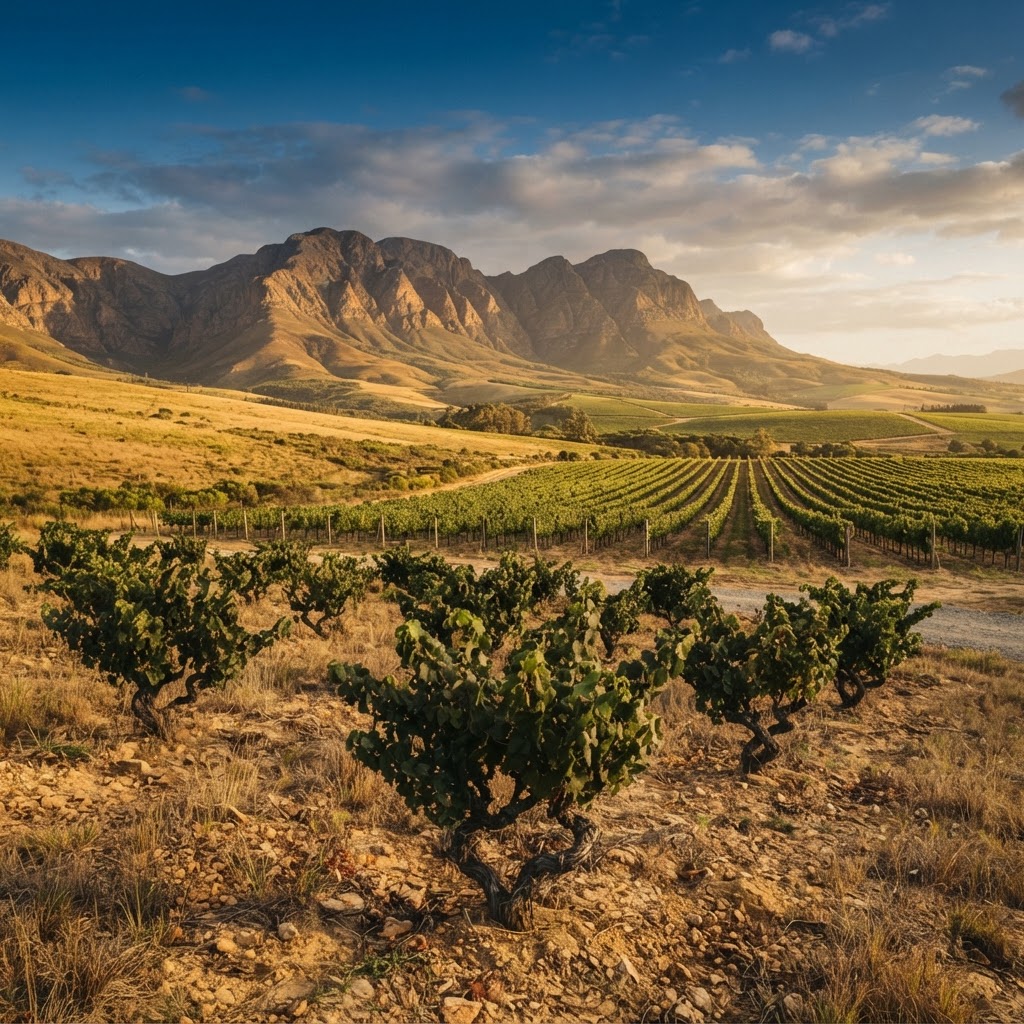
Drive through the Cape Winelands and you'll notice that not all vineyards look the same. In Stellenbosch or Franschhoek, you'll mostly see neat rows of vines trained along wires, like green hedges. Head up to the Swartland, and you'll often find something quite different: low, gnarled, freestanding vines that look more like small shrubs than anything planted in a row.
These are the two main ways of growing grapes: trellised vines and bush vines. The choice affects everything from how the vineyard is farmed to how the wine tastes in your glass.
What is a bush vine?
A bush vine, also called a gobelet or goblet vine, grows without any wires or support system. The vine is pruned into a low, open shape, with several arms spreading out from a short trunk — a bit like a cupped hand. It's one of the oldest ways of growing grapes, used across the Mediterranean for centuries.
In South Africa, bush vines are most closely linked with the Swartland and other warm, dry areas, and many of the Cape's oldest and most treasured vineyards — particularly Chenin Blanc, Cinsault and Grenache — are bush vines.
Why winemakers choose bush vines
Bush vines are made for heat and drought. Their leafy canopy naturally shades the grapes from the harsh sun, reducing the risk of sunburn. Because they're spaced widely and often grown without irrigation (known as dryland farming), their roots grow deep in search of water, which makes them resilient in dry years.
They also tend to produce small crops of intensely flavoured grapes. Lower yields usually mean more concentration, which is why many of the Cape's most exciting old-vine wines come from bush vines. And because there's no trellis to build, they're cheaper to plant in the first place.
The downsides
The biggest drawback is labour. Bush vines can't be harvested by machine, so every bunch is picked by hand, and pruning and vineyard work are slow and physical. Lower yields also mean less wine per hectare, which makes it harder for a farm to earn a living from them.
The dense canopy that protects grapes from the sun can also trap moisture, so in cooler or more humid areas bush vines are more prone to rot and disease. Grapes can ripen unevenly too, since some bunches sit in shade while others get more sun.
What is a trellised vine?
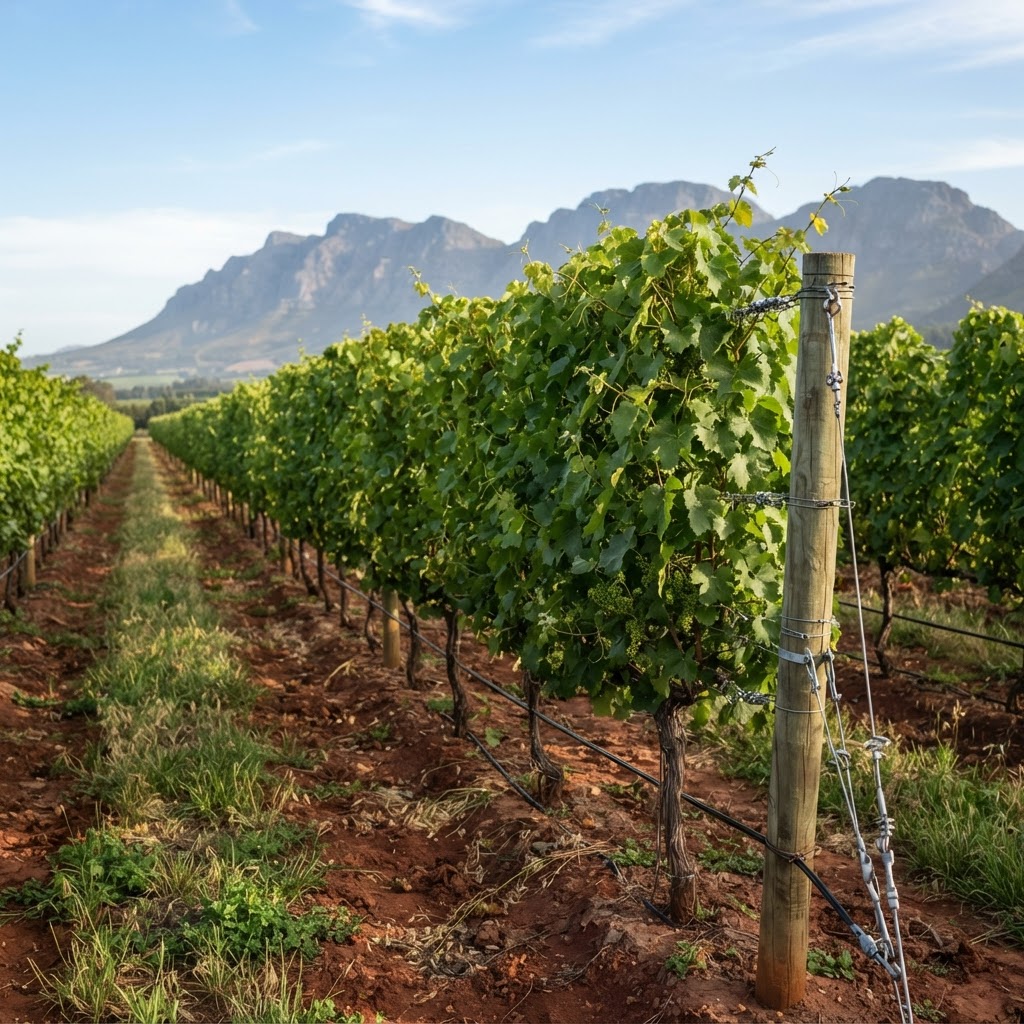
A trellised vine is trained along a system of posts and wires, with the shoots guided upwards or outwards in a tidy row. There are many different trellis designs, but the goal is always the same: to control how the vine grows and how much sunlight and air reach the grapes.
Most modern vineyards in the Cape, and around the world, are trellised.
Why winemakers choose trellised vines
Trellising gives the grower control. By positioning the leaves and fruit, they can manage how much sun the grapes get, which helps them ripen more evenly. Better airflow through the canopy also helps prevent mildew and rot — a big advantage in cooler, damper regions like Elgin or the Hemel-en-Aarde Valley.
Trellised vineyards are also far more practical to farm. Tractors can move down the rows, and harvesting and pruning can be mechanised, saving time and money. Yields are generally higher and more consistent, making the vineyard more commercially reliable.
The downsides
Trellises are expensive to install and maintain, with posts, wires and regular canopy work all adding to the cost. Trellised vines are also more likely to rely on irrigation, and in very hot areas grapes that are too exposed can get sunburnt.
Higher yields can come at a price, too. If a vine is pushed to produce too much fruit, the flavours can become diluted, so good growers have to manage their crop carefully.
Neither is automatically better. It really comes down to matching the method to the place.
Bush Vines
- No wires — freestanding
- Best in hot, dry climates
- Canopy shades the fruit
- Lower yields, more concentration
- Hand-harvested only
Trellised Vines
- Trained on posts and wires
- Best where control matters
- Better airflow, less disease
- Higher, consistent yields
- Can be machine-harvested
Which makes better wine?
Bush vines excel in hot, dry conditions where shade and resilience matter most, often producing concentrated, characterful wines from old vines. Trellised vines shine where control, disease prevention and consistency matter, and they make modern, sustainable farming possible on a larger scale.
Next time you visit an estate, it's worth asking how their vines are grown. If you get the chance to taste a wine from old Swartland bush vines, take it. It's a real taste of Cape history.