The Vineyard Year · June
June in the Cape Winelands
Deep Winter & Pruning Begins
June is a significant month in the annual vineyard cycle. Although the vines appear inactive, important vineyard work begins. The bare, dormant vineyards have a stark beauty, the mountains may carry a dusting of snow, and the Winelands offer a peaceful, intimate experience that is very different from the energy of the summer harvest.
Section A
Why This Month Matters
June matters because it is when the single most consequential vineyard task of the year begins: pruning. Every cane a grower leaves or removes is a decision about next season's crop — its quantity, its quality and the vine's long-term health. The structured, orderly appearance of a Cape vineyard is not nature's default but the result of this annual, hand-by-hand work. June is the month that reveals that wine begins not with grapes but with a pair of secateurs and a series of careful judgements.
Section B
What's Happening in the Vineyards?
In June, the vines are fully dormant. The sap has withdrawn to the roots, the canes are bare and hard, and there is no visible growth above ground. But beneath the surface, the vine is very much alive, and above ground, one of the most important vineyard tasks of the year is beginning: pruning. Pruning is the process of removing selected growth from each vine to shape it for the coming season. Growers remove the previous year's canes and select which buds will be retained to produce the next season's shoots and fruit. The number and position of retained buds — a decision that varies by vineyard, variety and the grower's approach — directly influences the vigour of the vine, the yield and the quality of the grapes in the following growing season. Pruning is skilled, labour-intensive work done by hand, and it is one of the most consequential activities in the entire vineyard year. It is also the reason the vines look the way they do: the neat, structured form of a vineyard is not the natural growth habit of the vine but the result of careful, annual pruning.
Section C
What's Happening in the Cellar?
In the cellar, June is a quiet month of continued maturation. Wines continue maturing in barrels and tanks, slowly developing their character through interaction with the oak (for barrel-aged wines) and through the slow chemical processes of ageing. The cellar is cool and still, and the focus is on patience and monitoring rather than active production. Winemakers may taste through their maturing wines to track their development, but the major decisions have been made and the wines are simply being given the time they need.
Section D
Typical Weather
June brings cold winter conditions to the Cape Winelands. Rainfall is common, and the landscape is green and rain-washed rather than the sun-bleached gold of summer. The mountains surrounding the Winelands — the Hottentots Holland, the Simonsberg, the Helderberg — may carry snow on their higher peaks after cold fronts, which makes for dramatic scenery against the green vineyards below. Daytime temperatures are cool, and evenings are cold. While the weather is less predictable than in summer, the rain and cloud bring their own kind of beauty, and the crisp, clear days that follow cold fronts can be spectacular.
Section E
Experiences This Month
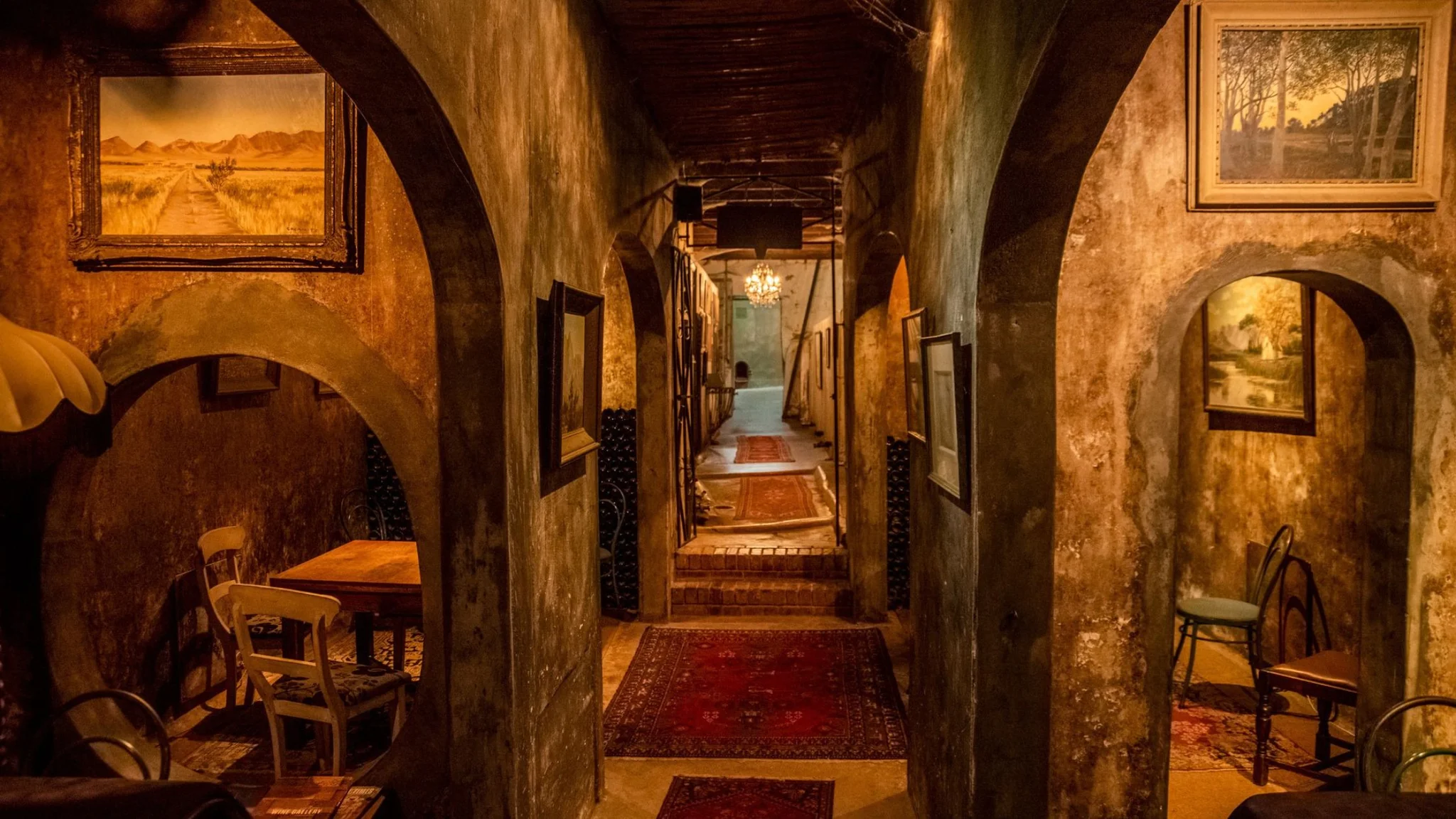
June offers a peaceful Cape Winelands experience and insight into the year-round work behind wine production. Fireside wine tastings are a highlight — many estates create warm, welcoming cellar-door spaces with open fires, and tasting robust red wines beside a hearth is one of the defining pleasures of a Cape winter. Warm food-and-wine pairings are popular, with hearty, comforting dishes matched to structured reds. Quiet estate visits allow for unhurried conversation and a more personal experience than is possible during the busy summer months. The winter vineyard scenery — bare vines, green cover crops, snow-capped mountains — is beautiful in its own stark way.
Section F
Why Visit This Month?
It is the Winelands without the crowds — warm fireplaces, hearty food, robust reds and a green, rain-washed landscape. For visitors who want to understand that great wine is made through twelve months of work rather than just the excitement of harvest, June is a revealing and rewarding time to visit.
These guides describe typical seasonal patterns in the Western Cape. Exact timing varies between regions, vineyards, grape varieties and weather conditions, and no vineyard follows an identical calendar. Specific experiences, tours and activities are not guaranteed at any particular estate — please check availability before visiting.
Plan Your Visit
Experience the Cape Winelands
Discover wine tours and experiences throughout the Cape Winelands, and let Wine in the Cape help you plan your visit.
No deposit to enquire · we reply within the hour, 7 days a week