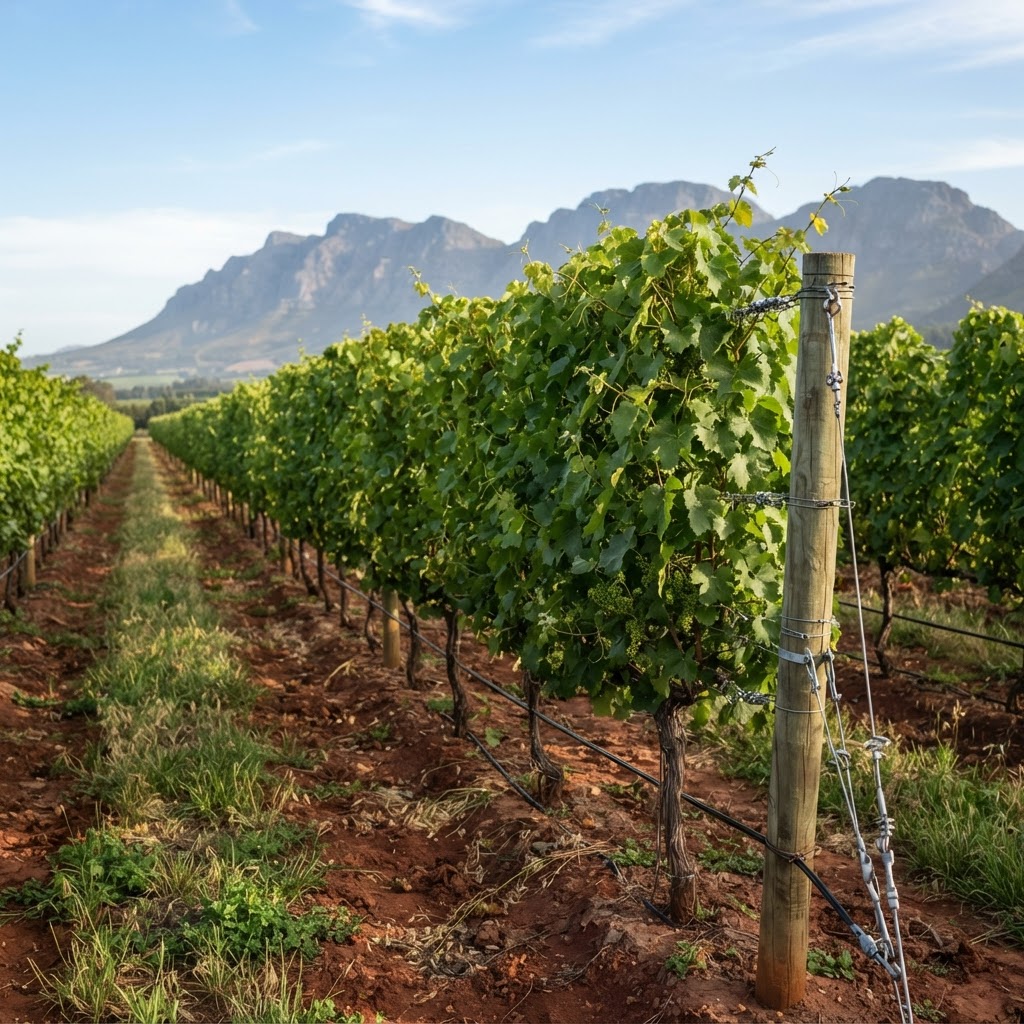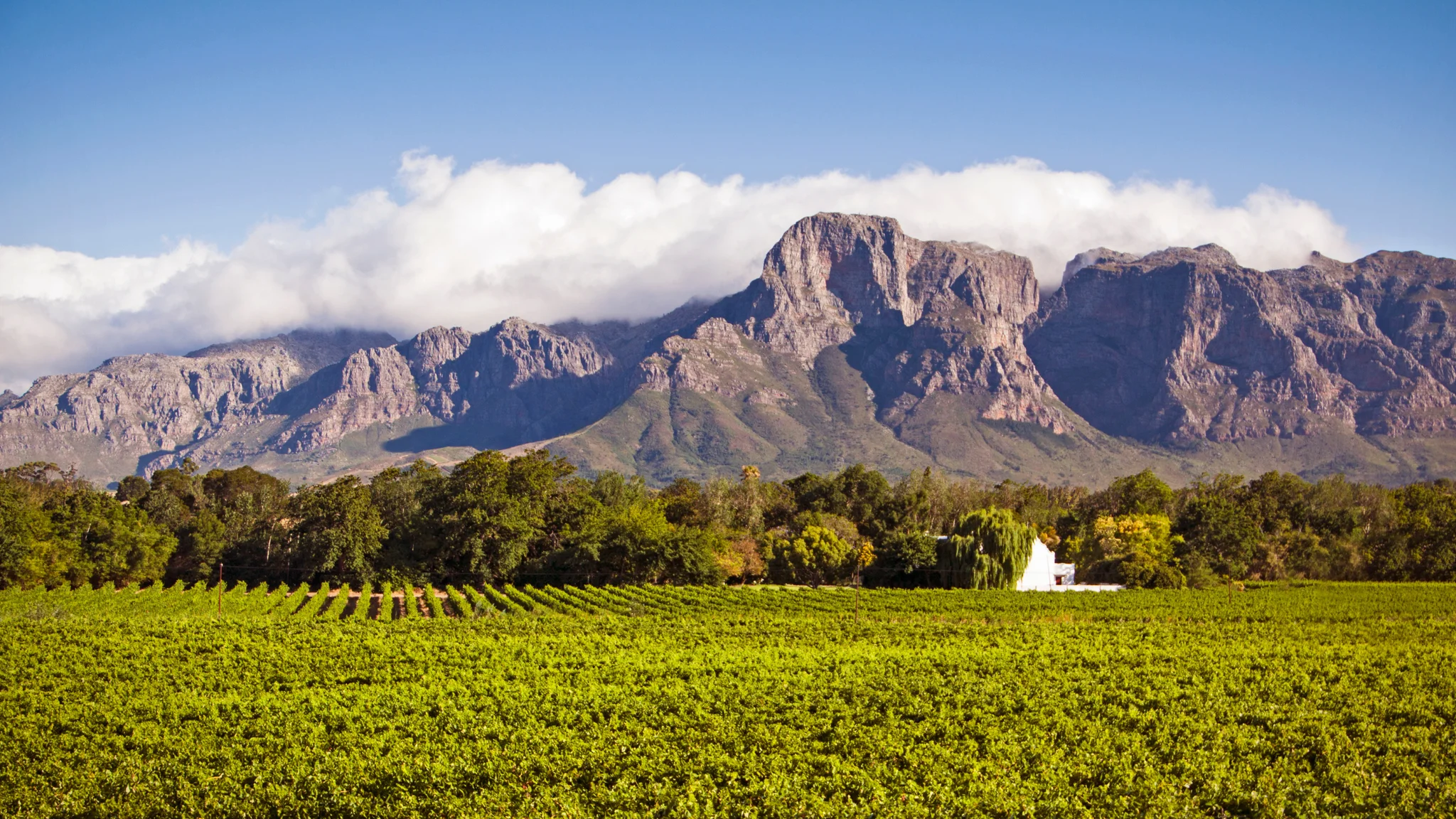
The history of viticulture in South Africa begins with a practical idea that turned into something far more enduring. In the mid-1600s, Jan van Riebeeck planted the first vineyards at the Cape, not for romance or refinement, but to supply passing ships of the Dutch East India Company with fresh wine. The goal was simple: keep sailors healthy and make Cape Town a more appealing stop on the long journey east.
What no one could have predicted was just how perfectly suited the Cape would be to growing vines.
A Climate Made for Wine
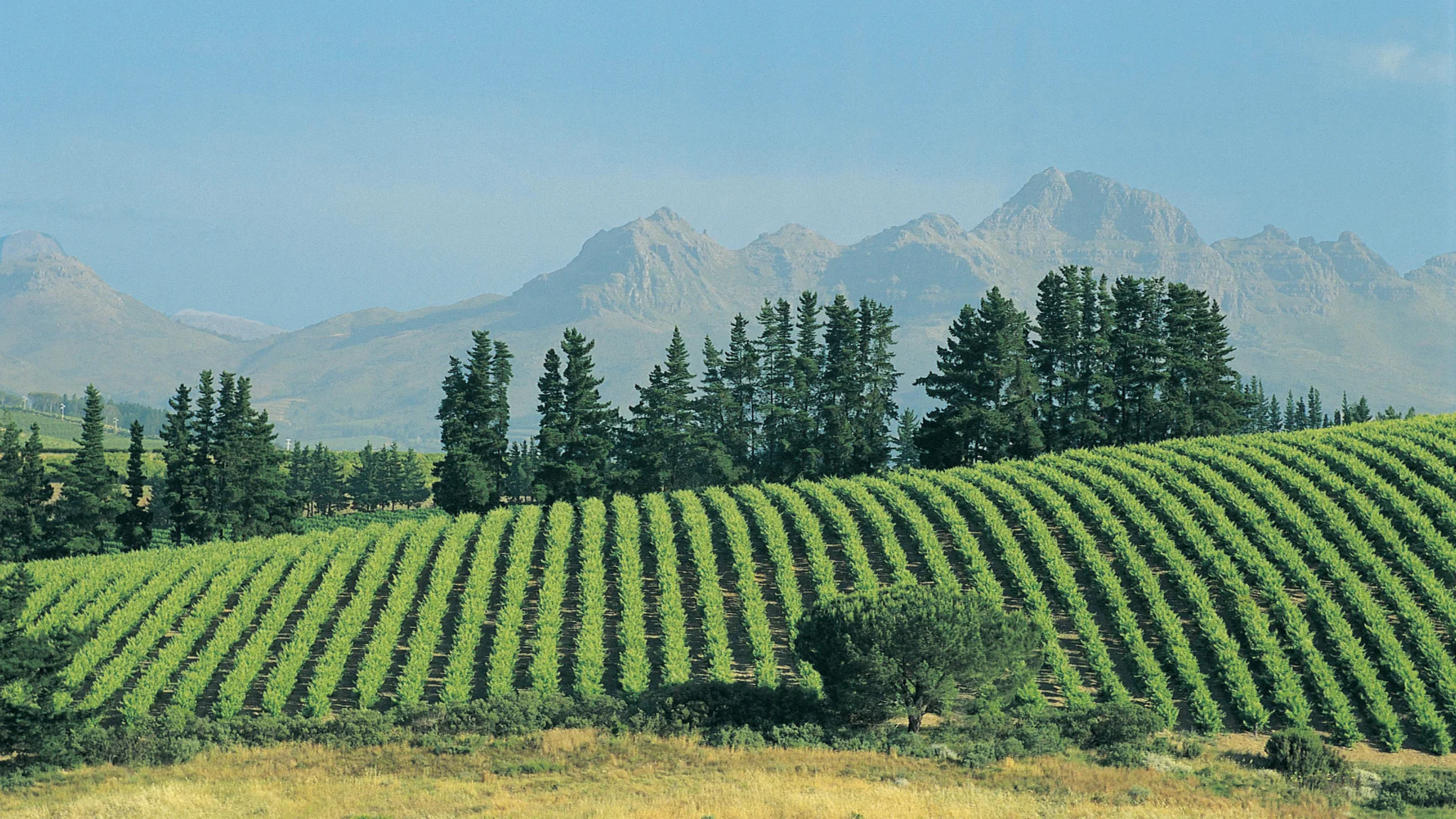
While South Africa sits closer to the equator than many classic wine regions, nature had a clever solution. The Benguela Current, a cold ocean current flowing up the west coast from the Antarctic, cools the vineyards and tempers the heat. This natural air-conditioning allows grapes to ripen slowly, building flavour while retaining freshness – a key reason South African wines are so well balanced.
Add ancient soils, dramatic mountains and cooling sea breezes, and the foundations of great viticulture were firmly in place.
From Humble Beginnings to Global Recognition
Over the centuries, viticulture spread from the early Cape settlement into regions we know and love today – Stellenbosch, Franschhoek, Paarl, Constantia and beyond. Winemakers learned to work with diverse climates and terroirs, planting different grape varieties where they performed best.
Today, South Africa produces wines that are internationally recognised for their quality, character and diversity – from crisp coastal whites to structured, age-worthy reds. The country’s winelands continue to evolve, blending old-world knowledge with modern innovation.
Why It Matters
The history of viticulture in South Africa is more than history in a textbook – it’s a living, breathing part of the landscape. Every vineyard tells a story of adaptation, resilience and respect for nature, shaped by centuries of learning and a uniquely Cape sense of place. When you enjoy a glass of South African wine, you’re tasting far more than fruit and fermentation – you’re sipping on history, climate, and a journey that began nearly 400 years ago.
If you’d like to explore this story first-hand, Wine in the Cape would love to guide you through the vineyards where it all began. Book your tour with us.