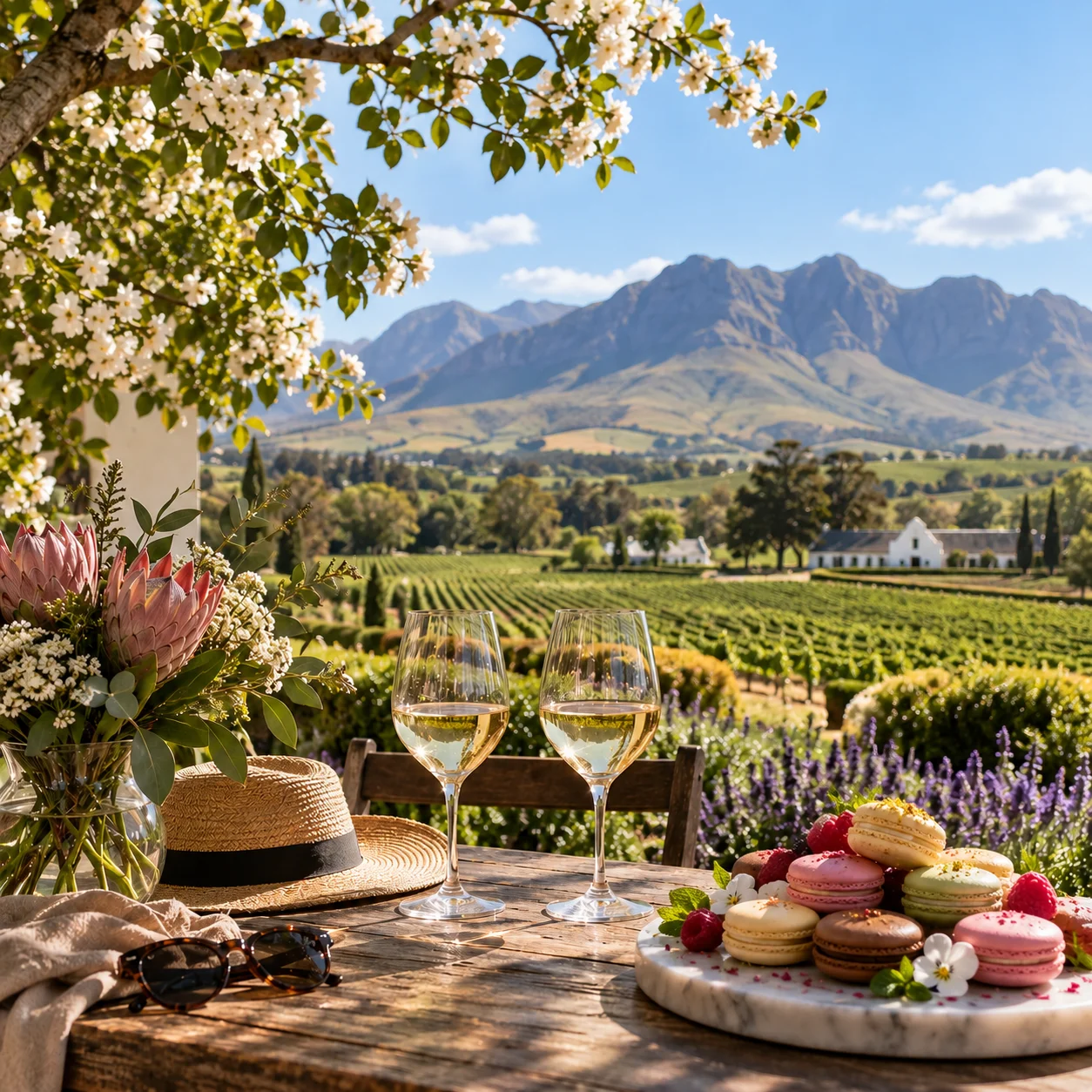
The Vineyard Year · September
September in the Cape Winelands
Bud Break & Spring
September marks the beginning of the new growing season. The vineyards wake from their winter dormancy, buds begin to open, and the first green shoots emerge. After months of bare, dormant vines, the landscape transforms as fresh green appears against the dark soil — a moment of renewal that is one of the most visually beautiful and emotionally hopeful in the vineyard year.
Section A
Why This Month Matters
September matters because it is the month of greatest risk and greatest hope in the vineyard. Bud break is the moment when the vine commits to the new season — and the tender new shoots are at their most vulnerable. A single late frost can damage or destroy the emerging growth, with consequences that ripple through the entire harvest. Growers watch the weather with genuine anxiety during September, and the frost-protection measures they deploy are a reminder that winemaking is never entirely in human hands. The vintage, in a real sense, begins to be won or lost this month.
Section B
What's Happening in the Vineyards?
September is the month of bud break — the moment when the dormant vines begin to grow again. As temperatures rise and the days lengthen, the buds that were laid down during winter pruning begin to swell, and small green shoots and leaves emerge from them. This is a critical and vulnerable time in the vineyard: the tender new shoots are susceptible to damage from cold conditions, and a late frost or a sudden cold snap can damage or destroy the emerging growth, with significant consequences for the year's crop. Growers watch the weather closely during September, and in frost-prone sites they may use techniques such as wind machines, smudge pots or even overhead sprinklers to protect the vines on cold nights. Bud break does not happen simultaneously across all vineyards or even within a single vineyard — it depends on the variety, the vineyard site, the aspect and the local climate. Varieties that bud early are at greater risk from late frost, while later-budding varieties may avoid the danger. The emergence of new growth is also when the cover crops planted in May are at their lushest, creating a vibrant green carpet between the rows of vines.
Section C
What's Happening in the Cellar?
In the cellar, September is a period of finishing and release. Some previous-vintage white and rosé wines are finished and bottled, making their way from the cellar to the tasting room and the market. Red wines from the previous vintage continue their maturation, slowly developing in barrel and tank. The cellar is in a transitional phase — the previous vintage is being completed and released while the new vintage is just beginning in the vineyard. There is a sense of the cycle completing and beginning again.
Section D
Typical Weather
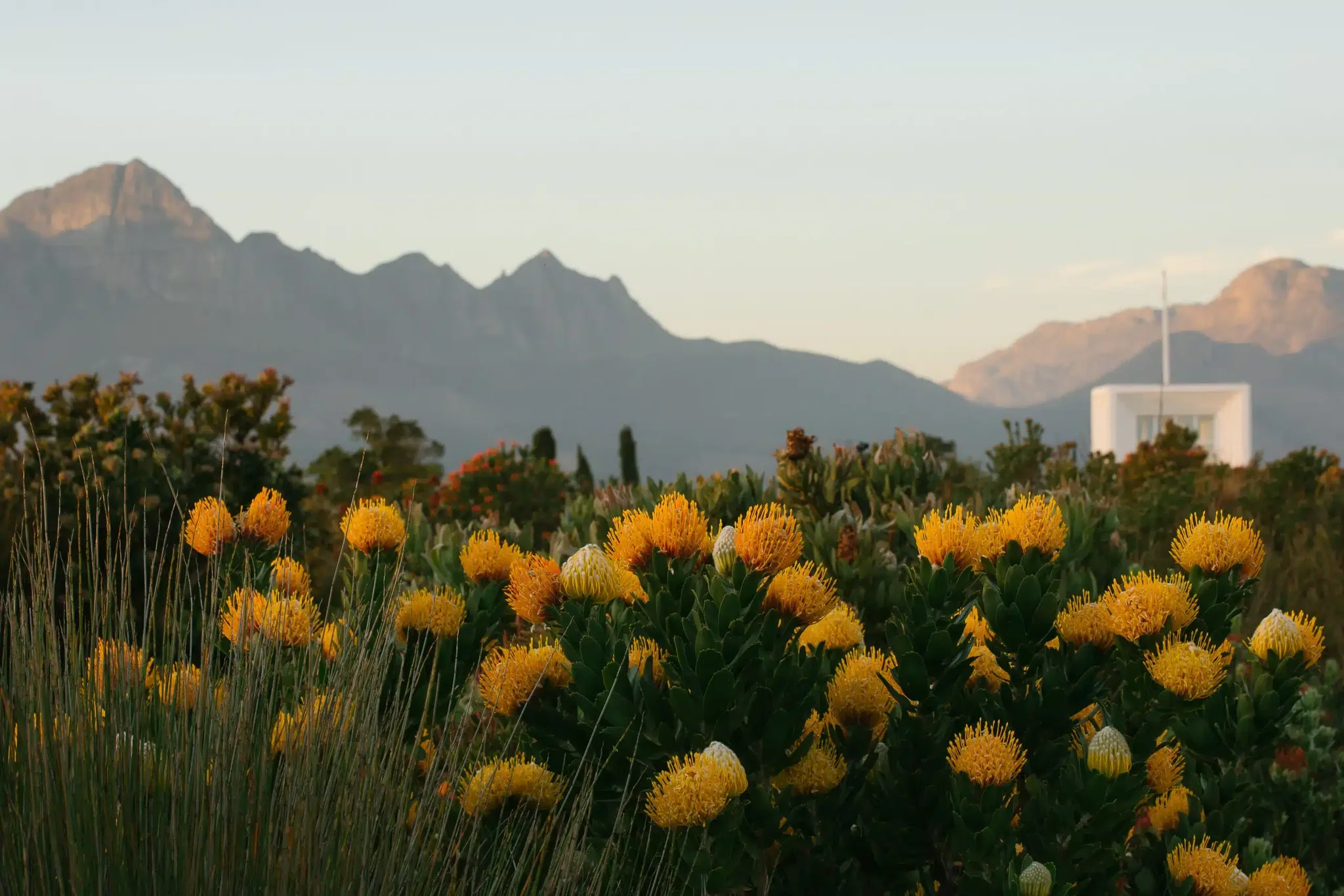
September brings milder spring temperatures after the cold of winter. Occasional winter showers may still occur, but the weather is warming and the days are lengthening. Spring flowers appear across the Cape — the region's famous wildflower season brings colour to the roadsides, nature reserves and vineyard margins. The combination of fresh green vine growth, wildflowers and the clearing winter light makes September one of the most visually appealing months in the Winelands.
Section E
Experiences This Month
September is ideal for visitors who enjoy spring landscapes and the beginning of the vineyard year. Spring vineyard walks reveal the fresh green growth and the structure of the emerging canopy. The wildflowers that appear across the Cape at this time of year add an extra dimension to vineyard visits. It is also a good month for wine tastings before the busiest summer period — the tasting rooms are quiet, the weather is pleasant, and the new releases from the previous vintage are often available for the first time. The sense of renewal and beginning that pervades the vineyards makes September a particularly uplifting month to visit.
Section F
Why Visit This Month?
Fresh green against dark earth, wildflowers along the rows, and a sense of beginning everywhere you look — September is a photographer's and walker's month. It is also one of the quietest times in the Winelands, which means unhurried tastings, personal service and the rare pleasure of having a vineyard almost to yourself.
These guides describe typical seasonal patterns in the Western Cape. Exact timing varies between regions, vineyards, grape varieties and weather conditions, and no vineyard follows an identical calendar. Specific experiences, tours and activities are not guaranteed at any particular estate — please check availability before visiting.
Plan Your Visit
Experience the Cape Winelands
Discover wine tours and experiences throughout the Cape Winelands, and let Wine in the Cape help you plan your visit.
No deposit to enquire · we reply within the hour, 7 days a week